

Early Detection: The Key to Fighting Oral Cancer
November 2, 2024Impacted teeth are teeth that are partially or fully covered by gum tissue or bone. When an impacted tooth becomes problematic, it may need to be extracted. Here’s what you can expect during the procedure:
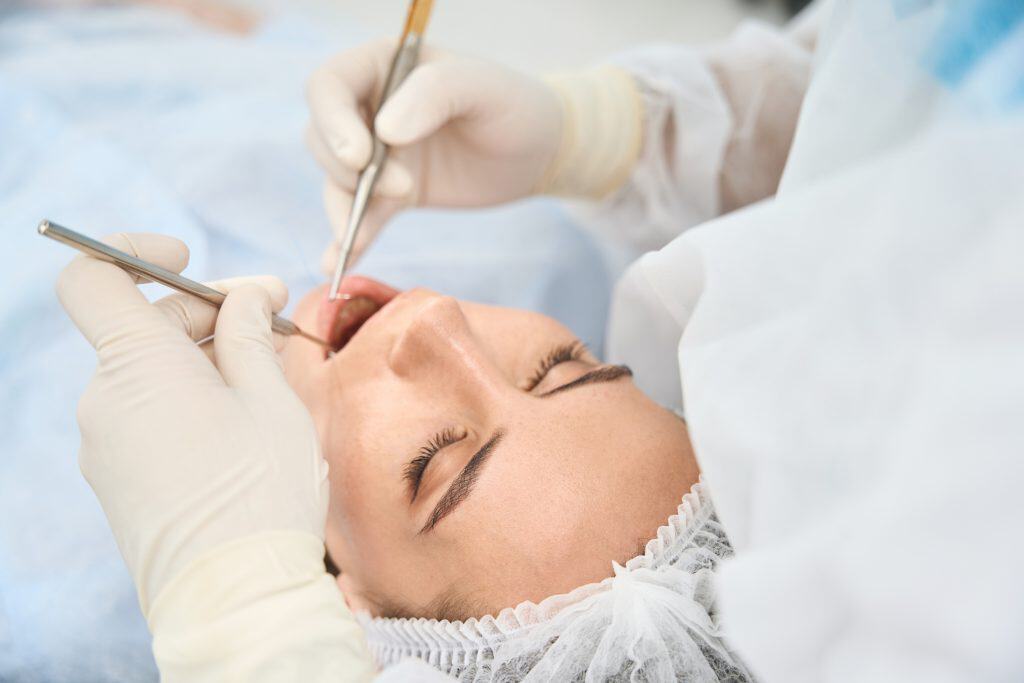
Woman in a clinic at a dentists appointment, the doctor cleans the tooth canal
Before the Procedure
- Consultation: Your oral surgeon will discuss the procedure with you, including the risks, benefits, and potential complications.
- Medical History: You will be asked to provide your medical history, including any allergies or medications you are taking.
- Anesthesia: Your oral surgeon will determine the type of anesthesia that is best for you. This could be local anesthesia (numbing the area around the tooth), general anesthesia (putting you to sleep), or sedation (making you relaxed but not fully asleep).
During the Procedure
- Incision: The oral surgeon will make an incision in the gum tissue to expose the impacted tooth.
- Bone Removal: If necessary, the surgeon may need to remove some bone to access the tooth.
- Extraction: The tooth will be carefully removed from the socket.
- Sutures: The incision will be closed with sutures, which may be self-absorbing or require removal at a later appointment.
After the Procedure
- Bleeding: Some bleeding is normal after an extraction. You can control bleeding by biting down on a gauze pad for 30 minutes.
- Swelling: Your face may swell for a few days after the procedure. You can apply ice packs to help reduce swelling.
- Pain: You may experience some pain or discomfort after the procedure. Your oral surgeon will prescribe pain medication to help manage this.
- Diet: You will need to eat soft foods for a few days after the extraction. Avoid hot, spicy, or crunchy foods.
- Oral Hygiene: Brush your teeth gently and avoid the area of the extraction.
Recovery Time
Recovery time varies depending on the complexity of the extraction. Most people can return to their normal activities within a few days. However, it may take several weeks for the extraction site to fully heal.
It’s important to follow your oral surgeon’s instructions carefully after the procedure to ensure a smooth recovery. If you experience any unusual symptoms or concerns, contact your oral surgeon immediately.

Related posts


July 1, 2024